Search This Blog

Loading...

Friday, 22 March 2013

Farm Boy Fantasy

So I'm reading this great book at the moment, Tower of Bones by Connie Jasperson. The premise is that a young lad is the next in the line for a family of mages who uniquely combine abilities of battle-magic and healing-magic. He's been tucked away in one of the worlds in the book living on a farm until his Dad sends him out on a quest.

It's a great book that tugs the forelock to classic epic fantasy, such as The Belgeriad and the like. What got me pondering as i read it was the premise of the 'farm boy' setting out on an epic journey to save the day. I used a similar device in my own fantasy series, with Emelia being a servant rather than a farm-girl.
And trawling through my secret fantasy cupboard (cunningly disguised as a book-case) it is a popular theme. The aforementioned David Eddings in the Belgeriad tells the story of Garion, raised on Faldor's Farm, who discovers that he is an immortal sorcerer and wielder of the Orb of Aldur. The five Belgeriad books are his journey of discovery as he learns of his heritage, his family, falls in love (kind of) with a princess, and takes on the dark god, Torak. Better than mucking out pigs certainly.

Although Eddings was often criticised for writing very linear fantasy, he is astonishingly popular and I must say his books are very readable.

Around the same time Eddings wrote Belgeriad, Terry Brooks wrote the first Shannara trilogy. Repeatedly hammered for being a LOTR rip-off, it was none-the-less crazy popular. I recall loving these three books (in fact I found them in my garage the other day, original cover and yellowed pages an' all). In the book, Shea Ohmsford is taken on a quest to get ahold of the Sword which, as a half-elf descendant of Jerle Shannara, he's the only one who can wield it. Shea was tucked away in a nice spot called Shady Vale, adopted by the innkeeper, and fulfils my own personal fantasy of living in a pub, with his adopted brother, Flick. So not a farmboy, but a pot-boy.

Even the acclaimed and very very long fantasy Wheel of Time enjoys the humble beginnings characters--Perry the blacksmith's apprentice, and Mat the naughty farm boy. You dig deeper, and they're everywhere--Simon in Tad William's The Dragonbone Chair; Richard the wood-guide in Goodkind's Sword of Truth; Pug the kitchen-hand in Fiest's Magician; Ged/Sparrowhawk the goatherd in Le Guin's Earthsea. In fact we could go crazy and think of Luke Skywalker fiddling with droids in a sandy farm on Tattooine, or Harry Potter's humble beginnings as a resident of the Dursely's cupboard.
Given that it is such a popular plot device, there is clearly something in the idea of a humble beginnings character who goes onto save the day/ fulfil a prophecy/ become generally awesome.

First off is the 'everyman' idea. Here is the concept that authors write these characters because they allow the reader to empathise with the protagonist, that they permit the reader to become more personally involved with an often fantastical plot. The 'everyman' character allows us to transpose much of our own 'normal' identity onto the character and their progress.

Secondly, every decent fantasy character makes a personal and metaphysical journey as well as a physical one. Whether that's learning more about their hidden pasts, or more about life and love and so forth, a story has to involved change otherwise it generally has no purpose. And that holds true for non-fantasy as well as fantasy works.

Finally the character rising from humble farm-boy beginnings to greatness allows us to cast a similar analogous fantasy on our own lives. Who hasn't secretly harboured a desire to achieve greatness, or to find some hidden magic about our lives. And that is never truer than in fantasy works, where the farm-boy is often a covert saviour, a kind of 'messiah.'


So the farm-boy as a fantasy trope is likely to stay, after all... Sam Gamgee was a gardener, and even King Arthur was called Wart and hung around farms turning into animals.

Sunday, 3 March 2013

There and back again, and again, and...

First of all, an apology. It’s been over two months since my last confession, sorry, blog post. You know how it is—xmas, work (the one that pays the bills), some writing/editing/proof reading. And I’ve been a little unfaithful to this blog, seeing another blog or two on the side....

Anyhow, happy new year. And to kick off this year’s posts where better to start than The Hobbit. I saw it with the kids in the Xmas holidays at our brand new cinema in Halifax, in glorious 2D (as watching films in 3D when you already wear glasses is little better than watching a dodgy bit-torrent version with Arabic subtitles and little silhouettes walking across the bottom of the screen). Now I should declare that there was no way I was not going to like this film. Seriously it could have been just a 180 minute still of Bilbo with Sting and Gollum and a caption saying ‘Eggsies’ and I would have soiled my seat. I’d been awaiting this film since before LOTR, since I was 11 and read the book for the first time (not least because LOTR pre-Jackson had a great film version already in the shape of Ralph Bakshi’s cartoon).

Yet just before I went to see it, the powers of the Necromancer (Sauron for kiddies) had already worked their wicked way on the public. Little mutters of desecration, alteration, new material, ‘untrue to the book’ expanded into ‘milking the fantasy cash cow’ (and what a gargantuan cow it could be in a fantasy world... a 15HD AC2 monstrosity with udders that imitated a Beholder’s twiddly eye stalks). So I was a tiny bit nervous when I watched it—I felt almost protective of the film, like they were insulting my mother in some strange Scorsese type-way (‘Waddya say about my mudder? Huh? Huh?’). After all, Peter Jackson is the Creator in my eyes—he who has brought forth majestic films for all to see (and I include ‘Bad Taste’, ‘Meet the Feebles’ , ‘Heavenly Creatures’ and ‘Brain Dead’ in that statement too).

And I was content. Because he didn’t screw it up. And I know there’ll be dissenters who were probably the same ones who lamented the loss of Tom Bombadil, the barrow wights, and were irritated by that whole Osgiliath diversion in Two Towers, but I loved all the modifications. Well, I could have skipped Sylvester McCoy as Radagast with his Bunnies of Protection +2, but the rest was perfectly pitched. I thought back to the book, which is after all a kids’ book, and wondered how it could have been done differently. Part of the problem is that there are some great scenes in the book that would be a bit naff if directly translated to film—the Trolls, the scene with Golem, even the Spiders. They would be rather twee if left as they were, and I considered Jackson did a good job of making the first two feel far more dramatic and not so silly. The sub-plot with Thorin and Bilbo was perfect—the characters had to make a journey within a journey or the film has no drive: after all, what is a story if nothing evolves, nothing changes?

The extra material with the White Orc gave a great finale, which came just right after the escape from the Goblin caves. The alternate would have been bringing the goblins out onto the mountains, which wouldn’t have seemed as dramatic to me—less personal for Thorin, less opportunity for Bilbo’s bravery.

Similarly the meeting in Rivendell was well done, if a tiny bit slow. The Hobbit is a prequel to LOTR whichever way you look at it. The dialogue was engaging enough, and I also liked the more sympathetic treatment of Saruman before he becomes swayed by Sauron and the Palantir. You do kind of want to slap them and shout, “Duh! How can you not know who’d hiding in Mirkwood?”

So like many I’m eager for the next film, not least to try and predict where they’ll cut it. Will it culminate in Smaug’s death, or will they put that in film 3? Will they focus on the battle of the Five Armies in film 3 or what? Or more linking material?

And it’s that extra material that is really irking folk, as it did to a lesser extent with LOTR. But why? What is so sacred about Tolkien and his work beyond the devotion of fantasy fans? I adore the books, but I’m happy to see the alterations in the same way I was happy with the ‘modernisation’ of the CS Lewis books for film. They’re good films, after all. I see adaptations that are dire, especially of comics—the League of Extraordinary Gentleman is shocking, despite the brilliance of the comic; Wanted is an OK film, but bears a minuscule resemblance to the comic version. There’s a school of thought that considers all art to be adaptable, changeable. When we see the twentieth interpretation of Great Expectations, or Pride and Prejudice, we don’t kick back over the alterations, the omissions, when the key plot points and most memorable dialogue remain. And that’s all that has happened with The Hobbit at the moment—the plot is still the same, the idea of Bilbo Baggins making a journey both physically and meta-physically, with the great quotes and the great songs, a bunch of dwarves (undoubtedly cooler than any Elf softies) and a dude in a grey hat.

For me the thrill of seeing such works on film is second to none, and the same applies to the adaptation of comics such as Thor, Spiderman, Iron Man, X-men and Avengers. I adored the originals, but they could not be replicated panel by panel on the big screen. And the kids these days don’t know how lucky they are to be seeing such awesome stuff at the cinema!


So happy new year, and I promise it won’t be as long until I post again. And I’ll kill the time to Hobbit 2 by playing the fab Lego Lord of the Rings, which has Radagast and Tom Bombadil in it!!!

Thursday, 13 December 2012

Alternative Guide to Alternative Reality 3... Comics!

Read Part one of the blog at Life in the Realm of Fantasy
And hop over like an excited Bunny to part two at Fresh Pot of Tea
 
And now for part three.....
 
If I were a dishonest man (and the admission that my previous Movember moustache makes me look like the Village People indicates I am utterly honest) then I’d claim that some awesome seminal sci-fi story created my interest in alternate reality. The truth is far from that- it was a combination of the awesome old-school Star Trek, and Marvel comics that take the blame.

For those who follow my blog that’ll come as no surprise. I’ve rambled about the key influence of comics in my fantasy writing before, and its impact on my current book, The Infinity Bridge, is glaring. The whole plot begs for a graphic novel, and the pace, dialogue and action is very comic book style in places.

One of the fundamental aspects of the book is the idea of alternate reality, that history/evolution/physical laws of the world could have diverged at some stage from our own. It’s a wonderful plot device—the possibilities are endless, and range from the divergences of individuals (think It’s a Wondeful Life and Sliding Doors) to entire worlds and their structure (think Wizard of Oz and Narnia in more extreme examples). So it is no surprise that the theme is a massive one in the world of comics.

The first mainstream use of alternate worlds was over in DC-world, back in the Wonder Woman and Flash comics. Wonder Woman kicked it off with our hot pants heroine falling through a dimensional rift and meeting a double called Tara Teruna (two Wonder Women... and so the fantasy begins...). But the Flash story, Flash of Two Worlds, was the seminal moment where we have a true ‘alternate.’ It used the great idea that the Golden Age Flash, a comic book character in our Flash’s world as well as ours, existed in a parallel world (called Earth-2 in later series). DC expanded this idea again and again, using the tool to resurrect Golden Age incarnations of their characters, and ones acquired from other publishers over the years.

It all got a little bonkers in the end, and DC started to wrap it all up with the series Crisis on Infinite Earths... and then rebooted and rebooted and wrote Infinite Crisis and 52 and... bleh...

But I’ve never been a DC boy (although my moustache again may infer otherwise), I’m Marvel through and through. For me the series ‘What If’, which was serialised in UK comics was my first exposure. It was a series where the light-bulb headed Watcher told a yarn about a reality that had diverged at a significant historical moment in the Marvel Universe. There were so many good ones, the memorable ones for me (probably because his was the most popular comic at the time) being the Spiderman ones: what if Aunt May had been popped instead of Uncle Ben?; What if someone else had been bitten by that radioactive spider?; What if Spidey joined the Fantastic Four?; What if the Spider clone lived? (it did, much to the groans of multitudes of Spider fans).

Yet those tales were only ever short spin-off ideas. The parallel worlds and alternate history as actual plot lines in Marvel comics really took off with the X-men. My era of the X-men was the classic Claremont-Byrne run, reprinted in the UK in wonderful monochrome which made some parts rather tricky to follow. Towards the end of their run together, the pair did a story Days of Futures Past, in which characters from an alternate future travel to the mainstream world of the X-men to try and avert a key event that created their divergent reality. It was massively and deservedly popular (not least because you got to see Wolverine toasted by a Sentinel...bub) and Claremont returned again and again to that alternate, often bringing characters and villains across (Rachel Summers Phoenix; Nimrod; Forge etc).

The idea grew and grew over the years, and there’s an awesome geek out list on the web with all the alternates numbered (from a 2005 summary I think). I found myself reading like a sad-o through it and nodding at the ones I recognised....

You can see the appeal as a writer, especially if you write a series. Alternate realities allow the writer to screw around with characters, about what we know or think we know about them, without upsetting the mainstream ones. It also allows the rather tired concept of evil versions of characters to be used (none may live up to the glory of evil-Kirk and his guy-liner).

It would be difficult to write anything on comics and how they influenced me without doffing the cap to Alan Moore’s Watchmen. Watchmen runs with the concept of how history would be altered if superheroes existed in our world—so how would the presence of a superhuman impact upon the Vietnam War, or international relations/politics, or day-to-day living, or technology. The influence of the Watchmen comic on the genre is vast, and it deservedly maintains its status in comic book history. If you are not a particular comic fan and wanted to see what could be done differently with the genre then this is a great place to start (the subtleties to the plot-lines are marvellous).

 
So that wraps up my ranting on alternate worlds, taking it back to where it all began for me. I haven’t broken any new ground in my book, using the alternate history model as an excuse for Steampunk fun. Oh, and its meant I could have an ogre pop up in some woods near York. In the sequels to the book I’m planning a few weirder ideas... and, yes, at some point I’ll need an evil version of a character. Its just got to be done...
 
The Infinity Bridge is up on t'Amazon, both in print and in Kindle. If you want a peek then click on the links...


Friday, 7 December 2012

Swamps and Sorcerers

I don't often post about my books or writing on here, mainly because there's more interesting things to rant about. However, when there's a new cover to show off, I just canna help meself.

Darkness Rising- Secrets is the third of six books. Unlike books 1 and 2, which were the result of a split of a single volume, it was written more as separate work. As with book two it runs two parallel story arcs, Emelia's quest for the crystals, and Aldred's journey. There's also the minor plots with Torm, Emelia's friend from bk1, who is our 'Everyman' character and more on Vildor, our baddie.

When there's so much going on its tricky to design a cover. Books 1 and 2 were stunning: we used a rather striking model for both, and the first decision was whether to continue with her on the covers. The dilemma was that if she graced bk3 then we were committed to all six with her.

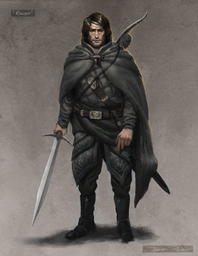
Discussing with Ceri, the amazing cover designer at Myrddin Publishing, we opted for a change. After trying images to represent Marthir (and her tattoos) and Vildor, we settled on a representation of Hunor, the rogue and leader of the comrades. For the background we opted for an image of the swamps of Ssinthor.

"After some period they became aware of shapes forming in the fog. Tiny at first, they grew in stature until ultimately they recognised the deformed trees of the swamp. They loomed all around. The branches reached like rotting arms towards the disorientated comrades.

There was little doubt they were far deeper into the swamps of Ssinthor as they exited the mists. The air was both hotter and wetter and the stench of the swamp overpowering."

On the full wrap around cover you can make out the silhouette of a building. We've used this as a representation of the Temple that the gang are seeking out, based on Jem's interpretation of Emelia's lore-touch.

"The four crept through the boggy foliage. Within five minutes they had reached the edge of the woodland and Orla had her first view of the temple.

Its shining black walls contrasted vividly with the near homogenous emerald colouration of the surrounding swamp. The temple was constructed on a raised area of land, but this aspect had not prevented the creeping green of the swamp’s foliage from working its way up to the walls. The ancient carvings of snakes and dragons were interspersed with bulbous creepers that gave the structure a horrid vascular appearance."

So, here's the final result. Different to bks 1 and 2, but with enough of the theme to make it feel part of the series. The book'll be released on Kindle just before x-mas, with the print early New Year. Fun times!


Friday, 16 November 2012

To Infinity...and back again

About a year and a half ago, when the kids got sick of me saying my fantasy books were too violent for them to read, I decided to write a book targeted at teens (nominally referred to as YA... young adult). Various ideas rattled around the brain box, but none seemed exactly right.

I decided fairly early on that I should stick to what I know, namely speculative fiction. I felt pretty saturated with fantasy, so the logical genre was therefore sci-fi. The combination of sci-fi plus teen, plus what my kids might have liked led me down memory lane to try and think what would get me interested at that age.

It didn’t take long: Dr Who, Star Trek and Star Wars.

For the kid growing up in the Seventies it was the eternal conflict, and indeed now the franchises have been milked to the point of a shrivelled cow, it remains an ongoing concern for the current teen geek.

On one hand we had the wonderful British eccentricity of Dr Who, airing most Saturdays on the BBC and driving most of us behind the sofa (admittedly not so much as a teenager...). On the other we had the re-runs of the original Star Trek, with the green lass at the end and lots of gags about the captain’s log (read ‘poo’) and Mr Spock’s final front ear. Although slightly archaic even by the late 70s there was a glossiness and action about Star Trek that ran in direct opposition to Dr Who.
Could you love both? Of course—but you had to like one more than the other.

And for me it was always Who. I grew up in the era of Tom Baker’s fourth doctor—all Simpson-esque eyes, multi-coloured scarf and utter bizarreness. I have faint recollection of Pertwee’s last stories (Planet of the Spiders), but I do wonder if they’d been affected by anniversary re-runs or later by videos. Me and my brother had a vast collection of Dr Who books and a knowledge of the series that would have won us Mastermind (indeed some dude did win Mastermind with Dr Who as his speciality subject and I could answer all the question). Dr Who journeyed through my childhood with me, in his magical blue box. I recall being gutted about being in a school play because I was missing The Pirate Planet. I can recall being terrified by the robot mummies from Pyramids of Mars, and the stone hand from the Hand of Fear. I recall me and some mates playing a game where we were inside the Doctor’s brain from the Invisible Enemy. I can recall the nightmares from the giant slimy thing that popped up from the skull in Image of the Fendahl. And the bad guy drowning the doctor in the Deadly Assassin (which really got the censorship lobby going) was etched on my mind forever.

That era of Dr Who was simply amazing, and even now the stories stand up to scrutiny with the wonderful mix of gothic horror and sci-fi, the larger than life Doctor and the splendid companions (Sarah Jane, Leela and Romana). So I took the essence of that time and tried to create a story which would emulate the buzz I used to get with Dr Who –the balance of excitement, mystery, humour and sci-fi. The baddies needed to be tough, near indestructible, but with some Achilles heel that was apparent after the nerve wracking chase sequence. There needed to be a British-ness about it, so I set it in York, and also roped in a Victoriana alternate reality for good measure. With a dash of clockwork. The companions have been replaced by the teenage main characters. The bizarrity comes from Ben, the heroic schizophrenic brother of Sam. And the wisdom, the mentor, the alien intellect role of the Doctor? Why, that’s Merlin, but existing as a dissociated consciousness on the internet.

And my final nod to the Dr Who of my childhood? Tom Baker’s final episode was Logopolis, with its unforgettable finale at Jodrell Bank radio-telescope in Cheshire. Where else could I have my own final showdown in the Infinity Bridge?

The observant amongst you will note that I’ve avoided talking about Star Wars. For me the first two will remain cherished memories, the rest curious fun. Iconic, yes. Enjoyable, yes. But it was not a patch on Dr Who in terms of influence for me.

So the mind is already at work on the sequel, and this time there might be some old school Trek influences creeping in.... (‘On Earth, we call this a kiss’ ‘I like this very much, Jim Kirk.’ (soft focus on green lass)).

Saturday, 27 October 2012

Lydia and the love of Ink

Of all the strange fashions and things that have changed over my moderate span on this fair earth none fascinate me quite as much as tattoos. When I was a kid (in the Seventies) tattoos were generally correlated with being a rough bugger. The sort of tattoos that you saw back then were old school blue ink ones, usually fuzzy, and with declarations of love for (i) mother (ii) salty Susan (iii) football team/ England/British Bulldogs (iv) Elvis. The final tattoo cohort was typically middle aged women who had been daft enough to try and do their own whilst bored in a maths lesson with a sharp compass and some India ink.

During my years of being a doctor my exposure to tattoos has expanded to rival that of a dedicated tattoo artist. Working in anaesthesia and theatres I tend to see plenty of exposed flesh, and indeed on ITU my referrals have their own collection of ‘ink.’ And there is still a vast variety of colour and style. The cringe worthy ‘suck here’ tattooed above the pubic bone, with a helpful arrow pointing southwards, makes an intermittent appearance. Odd Arabic/Chinese/Indian script seems to be getting more popular, much to my bewilderment, as does tribal Polynesian tattoos around biffed up biceps (which looks OK, to be fair).

And I think as Tattoos have improved in their style, colour and frequency their use as an indicator for general rough-ness has diminished. Don’t get me wrong—there is still a usage for the well-established teeth-to-tattoo ratio in judging people, but on a whole more and more younger and younger people have them now, and are perfectly decent types.

I’m trying to think when it all changed. I recall great tattoo stories as a kid being the chatter of the playground. One about a mate’s mate’s brother’s mate bumping into a half-ogre skinhead in Leeds city centre, and the skinhead saying ‘Ask me my name, go on, ask me!’ The terrified mate’s mate’s brother’s mate wisely did this, and the skinhead pulls down his lip and displays his name tattooed inside his lip. Presumably it was Bob, or Sam, or more likely Gaz/Baz/Daz rather than Tarquin or Horatio.

Facial tattoos also were a source of childhood delight—nothing displayed your general psychopathic ruffian status more than a fetching web on your neck and jaw, or a tear tattooed on your cheek, or LUFC (Leeds United Football Club) on your forehead. This notoriety was compounded by the perception that facial tattoos were illegal, that you could get arrested if you had them.... I know, we were young and also believed the student-getting-chloroformed-and-waking-up-without-kidney one as well.

Perhaps it was late Eighties to early Nineties when it flipped over. I seem to recall that average folk were beginning to get ‘inked’ then. More women were starting to have butterflies/roses/celtic patterns, often around ankles and lower backs. Celebrities too caught on, and I think as those images filled the magazines it became far less stigmatised. It slipped from the realms of alternative culture/heavy metal/goth into the mainstream. Interestingly I think the alternative fashion side reacted by becoming more extreme in the tattooing—advancing from small areas of tattoos to sleeves and whole backs.

And I don’t know whether its desensitisation, or maturity, or mid-life crisis, but I’ve found myself increasingly drawn to them. Of course, when I was 20 and full into grunge (with my parka, long hair, earrings, Mudhoney t-shirt) I went to have one done. Quite a funny story, actually. I went with my buddy, Giles, who is pretty much straight as they come. We decided to have a bit of ‘flash’ work—a yellow smiley face (we used to wear the badges as teenagers). On our backsides. So I ask for mine the size of a ten pence, and 30 mins later it’s done. Giles, looking pale, asks for his smaller. Smaller than a 10p? Like a penny? To be fair, he had to have a patch shaved off to do it.

Anyway I digress, as ever. Not content with my crap tattoo, that is, after all, only just better than having ‘Elvis’ on my arm, or Horny Devil (complete with a well endowed red imp) on my deltoid, I’ve been contemplating some major ink. This could be regarded as an atypical move by a consultant anaesthetist, but as long as it isn’t across my face like the leopard-dude I should get away with it.

But what to have? You wait until 41 to do it properly and you can’t just have any old crap. It has to represent or symbolise something. Anything circular or tribal won’t work—my physique is said to be the bastard offspring of Gandhi and Casper the Friendly Ghost. All my interests are ultra-geeky—options of daleks, spiderman or Gandalf have met with a medusa stare from the wife. I don’t like writing on tattoos—part of me worries that ‘Ross is great’ will not come across well in High-Elven, and when I think of names I always remember Jonnie Depp and ‘Winona Forever.’

I think I’ve boiled it down to a few options. A good friend had a dragon done, so I kind of feel that one’s out. I like Coy Carp ones—mainly for the colour; and I like the image of a phoenix (as it unites my comic, fantasy, and symbolic interests). Phoenix is slightly ahead—if I was really cool I’d get it done like Battle of the Planets....

So anyhow, I’ll probably be still working up the nerve in ten years time, and in the interim I’m embracing middle-age and growing a moustachio in November in aid of men’s cancer. Far less permanent if it all goes horribly wrong.

I’ll leave you with Lydia, one of the greatest proponents of body-art the Muppet world has known.


Friday, 12 October 2012

Pantophobia

I flogged one of my books to a lad I know at work, who has limited interest in my soap opera style epic fantasy, but has a missus who loves the stuff. She's a big Dave Eddings fan, and as my book has some similarity to the linear fantasy of the Belgeriad, I hoped she'd enjoy it.

I bumped into him the other day and asked how she was getting along with it. He said she was really get into it, but had to stop reading it one evening as a scene was terrifying her. I was a little taken aback- after all I chanced my 10 yr old lad reading it, and he wasn't fussed about the occasionally visceral scene or two, and he certainly wasn't scared (well I couldn't hear him scream whilst I watched telly downstairs).

It would seem it was an early scene where a Dark-mage chases the heroine Emelia through dark cobbled streets, and corners her in an alley. So, yeah, creepy... but, enough to make you stop reading?? Admittedly it may have just been her excuse, and she thinks it is a bobbins book....

It got me thinking about the nature of fears. It's a topic that comes up a lot in our house; after all, fear is a salient aspect of childhood. There's a commonality to fear with my two older kids, and then a divergence which typifies their personalities. Both had the separation fear, and the fear of loss that all kids have. That's something that lurks inside all of us, I think, that terror of isolation, of loneliness. They had a common fear of me and the wife splitting up. That stemmed (logically) from an abrupt swathe of people we knew separating. So every time me and t'wife get the arse on with each other about pointless stuff (I didn't tidy up, usually) the kids were wailing like drunken banshees about us not loving one another etc etc. All rational thus far.

But it's the differences which fascinate me. Charlie, with his vivid imagination, his heart on his sleeve, has fantastical fears. His fears were of the mythical and supernatural. I can recall him being scared witless by a kids spooky story where a boy gets turned into a doll. And that Dr Who episode where the girl traps a boy in a drawing. He was really freaked by it (actually I get that fear... I was disturbed by it too!!!). His has always been the monsters and the vampires and the ghosts.

Evelyn, ever pragmatic, was first scared of dangerous beasts. Sharks in the sea in Devon; box jellyfish in the English Channel; snakes, lions, venomous spiders in Yorkshire... She's moved on now to disease, after an ill-advised trip to Thackray's medical museum in Leeds. Now I'm continually questioned on a range of dire pathologies by her, whether small-pox is coming back, and how worried she needs to be about anthrax. It's like having a mixture of House and Jack Bauer inside an eight year old.

I think back to my childhood, and my fears were no less rational. I had the standard (for my generation) Dr Who scared moments (the Ruton in Horror of Fang Rock; the robot ventriloquists dummy in Talons of Weing Chiang... in fact anything involving Robert Holmes and his love of Gothic horror on Saturday tea-times). The ghosts and ghouls less so, but I recall one episode of the sci-fi series Sapphire and Steel, wherein people from photographs came to life... and this soldier had no face. I was terrified for weeks after that...

The only fear that remains is one of loss, and I suppose by extension of that the fear of death. These are the common fears of most. As you grow old you become afraid for others-- afraid my kids will run into problems, get hurt, get knocked over, and this eases your own somewhat. But every now and then you get a wrench in your gut about something...

So with all that lingering in the rear of our minds, why do we seek fear for entertainment? Why do we like to be scared? There's a huge market for horror, and by that I don't mean paranormal sparkly vampires, I mean good old fill your pants and spill your drink TERROR. And every weekend people jump off perfectly safe bridges with elastic bands on their back, just to get the feeling of hurtling towards a river four hundred feet below and not dying. We invite fear back into our lives quite readily. Why?

I suppose fear shares the same physiological response as any adrenaline surge: extreme excitement, preparing for battle, fighting, running for your life. But the situations we create now are sanitised, they are safe fear, far more than our ancestors ever could. The invisible spirit on Paranormal Activity isn't going to come out of the TV and drag you across the floor. The bungie rope is going to hold. The parachute will open. The free fall rollercoaster style ride won't splat you all across the bored queue below. And with any buzz, repetition equals less thrill. You can see as a society we seek more and more thrill, more condensed controlled terror, to sate our needs. Everything now is 'extreme.'

Yet,ironically, the fears we carry from our early days never really leave. The fear of loss, the fear of passing away perhaps before you have had time to do what you want or say what you need to. Is there a way of facing these fears, these anxieties, in a sanitised way? I'm not sure there's a way of making it cuddly, or disposable, or easy--but I think that by sharing fears with others, by accepting we all have those basic anxieties in common, we can learn to live with them a lot better.

Hang on... there's a scratching on the window....

(yeah, yeah, Salem's Lot joke... couldn't leave you on too much of a downer